Tiger Baby Records
Tiger Baby Records is the music arm of Tiger Baby Films, co-founded by filmmaker Zoya Akhtar, Reema Kagti, and musician Ankur Tewari. Their vision is storytelling through sound, albums, EPs, podcasts, documentaries, live events. A label with serious creative credibility and a genuinely distinct cultural position in the Indian indie music space.
Year
2025
Scope
Visual Identity
Client
Tiger Baby Records
Duration
2 Weeks
The problem with most indie label identities
Most indie labels either look like they're trying to be a major label, polished, corporate, safe or they lean so far into raw DIY aesthetics that the brand disappears. Tiger Baby Records sits in a more interesting space. It's backed by filmmakers, rooted in storytelling, and spans Gen Z discovery culture all the way to millennial nostalgia. The identity needed to hold all of that together.
What I designed
A visual identity system, covering brand tone, colour language, typography, and creative direction, built around one core idea: a label that already knows about the artist before they blow up.
The tone direction was witty, tuned-in, effortlessly cool. Not the brand that chases culture, the one that sets it.
The visual decisions
Three colour worlds, each serving a different context. Deep blue and gold for credibility and cultural authority. Green and teal for the discovery and organic side of the roster. Pink and crimson for the bold, genre-fluid end. Each palette can stand alone but they share the same typographic DNA, condensed bold display type paired with script overlays, where the script carries context and the display type carries attitude.
The textured, grungy treatment across the system was a deliberate pushback against the over-produced aesthetic that dominates mainstream label content. Indie music has grain and texture. The visual language needed to say that without spelling it out.
The creative executions
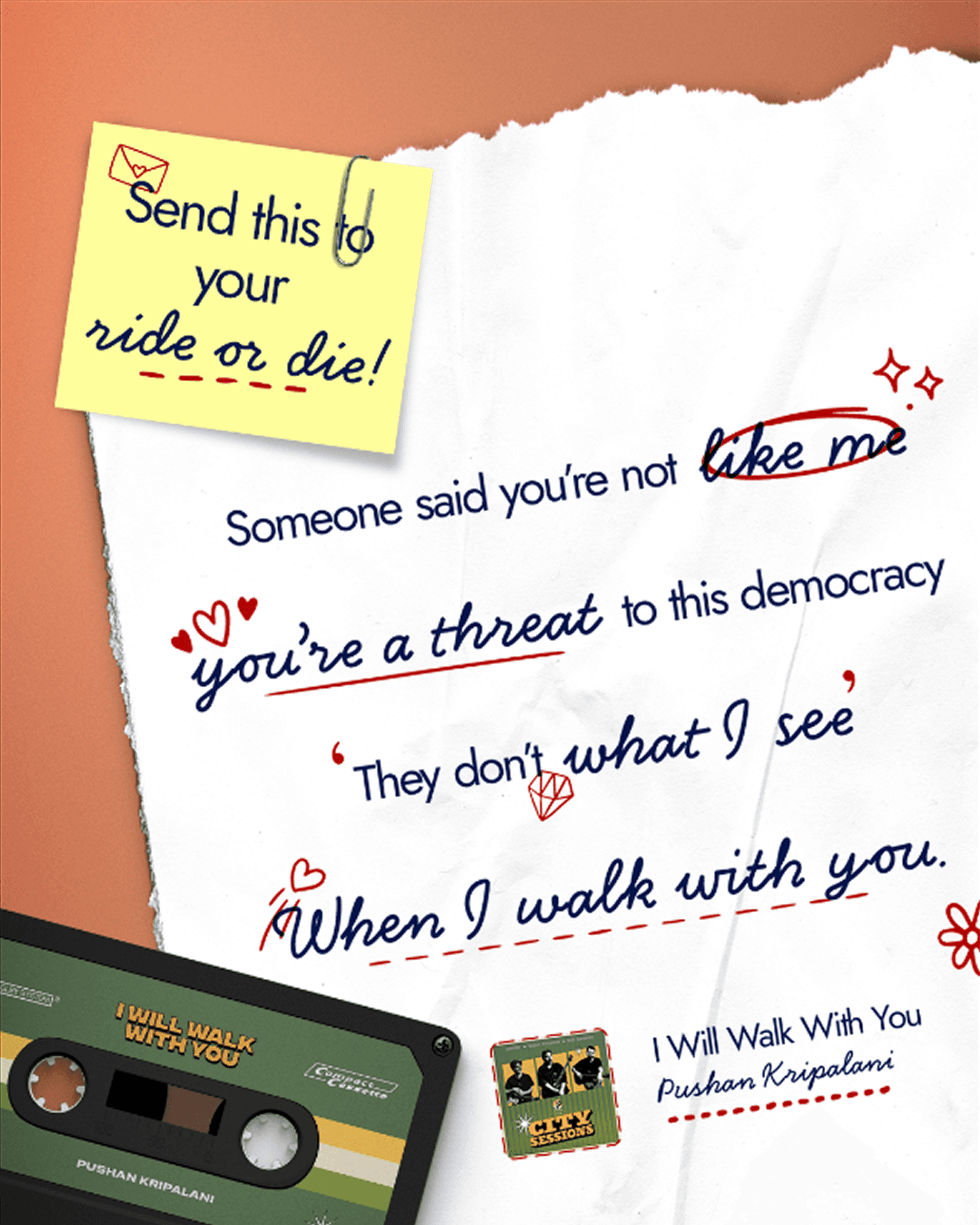
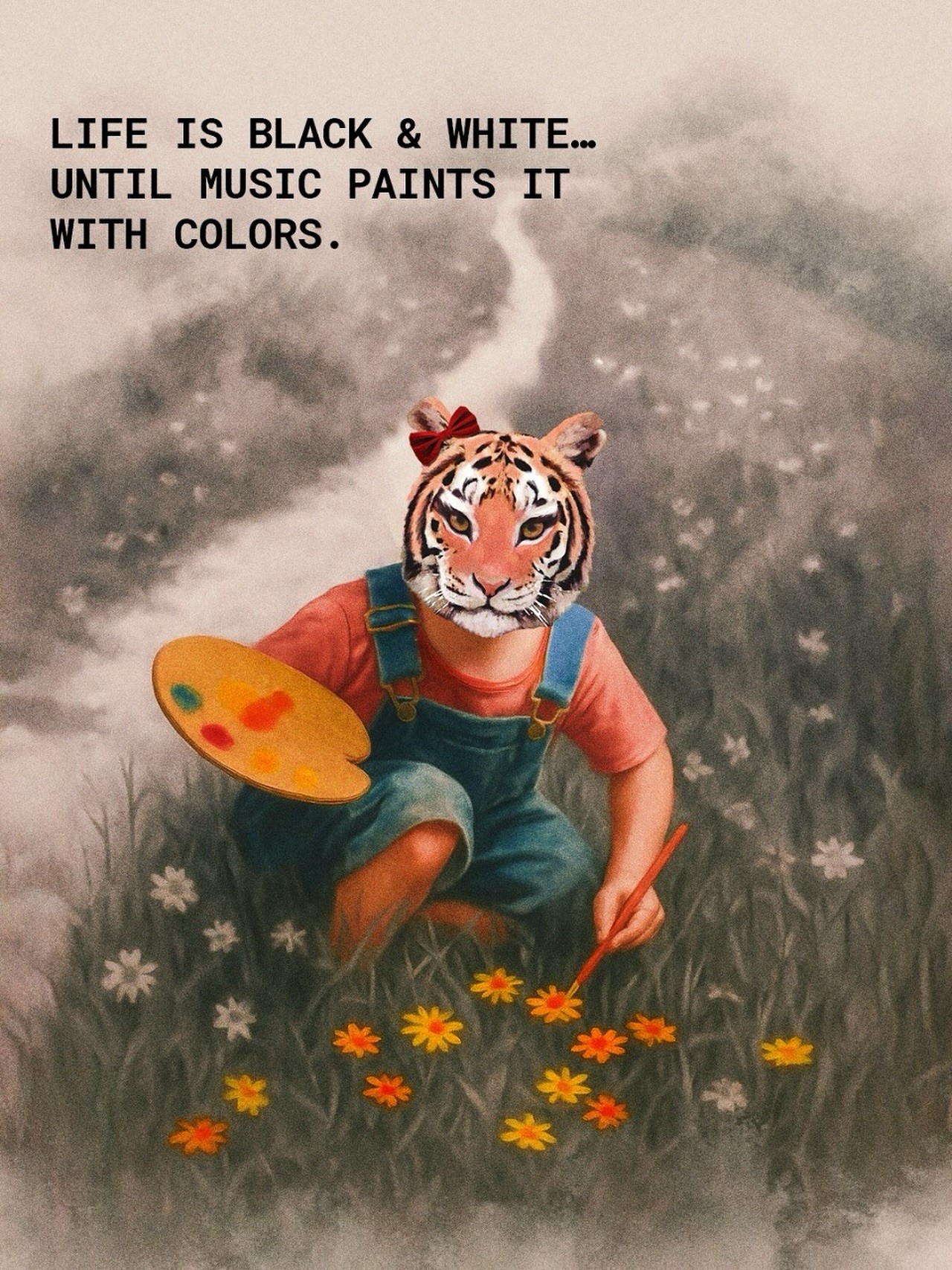
Campaign assets stretched across Bollywood-inspired vintage poster formats, illustrated storytelling frames, film noir treatments, and handwritten artist recommendation cards. Each format adapted to its context while the tone kept everything in the same world. The range was the point, showing the identity could flex across very different creative territories without losing its character.
Why this pitch mattered
Indie labels don't compete on budget. They compete on identity. The work wasn't just about making things look good, it was about giving Tiger Baby Records a visual language distinct enough that their audience would recognise them before they see the logo.