Sciron
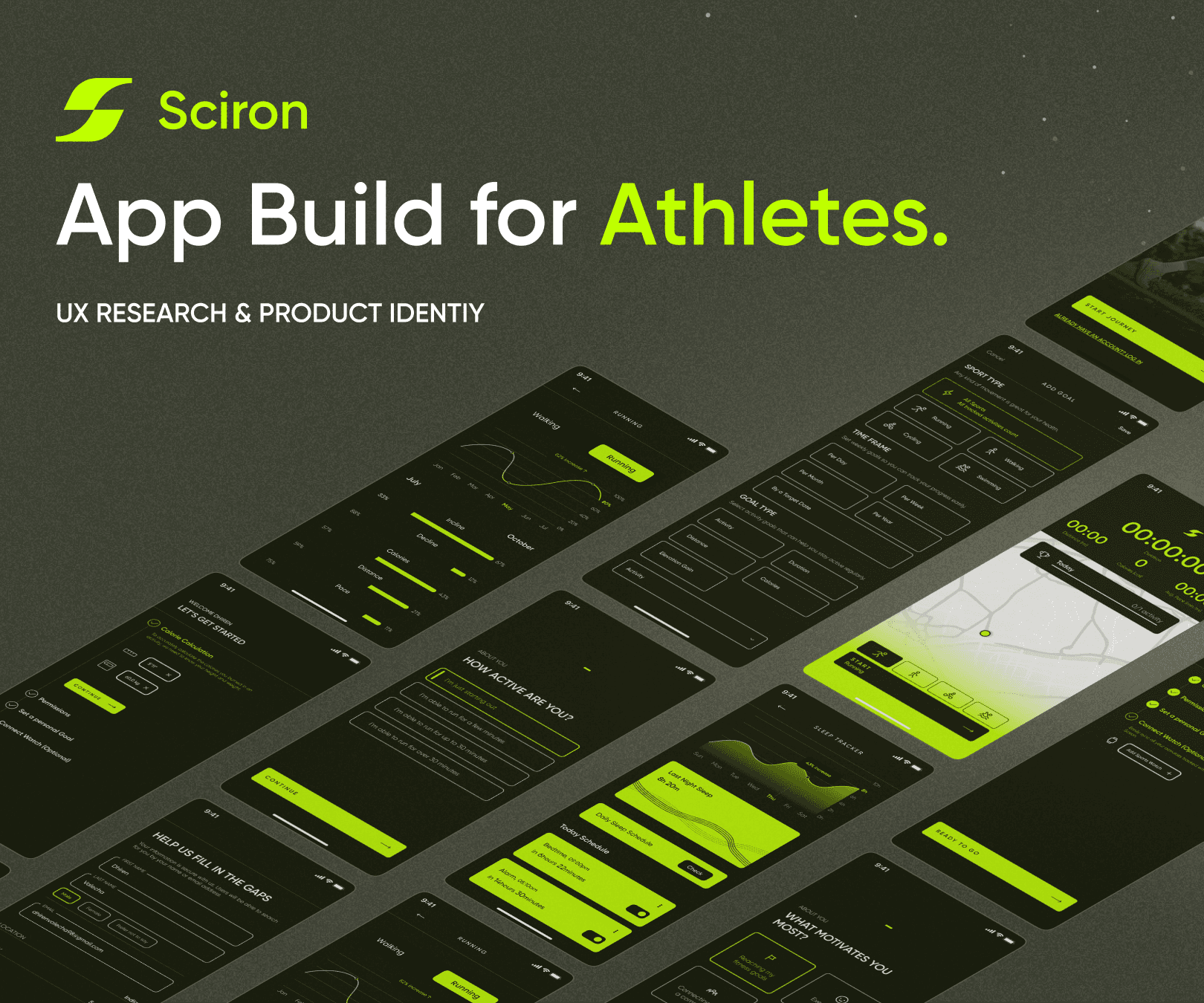
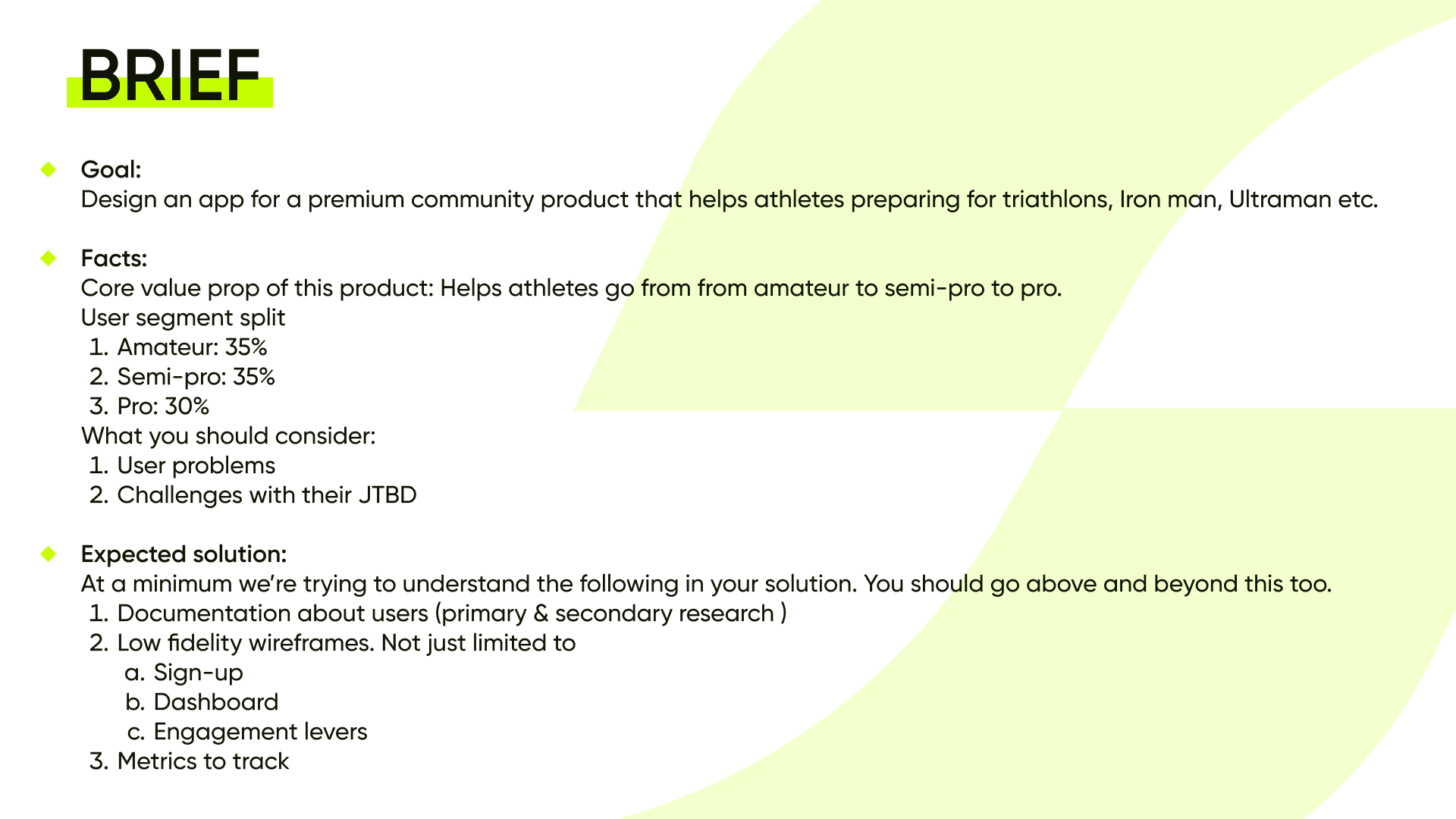
Endurance athletes are underserved by most fitness apps. Tools that exist are either too generic for someone training for an Ironman, or so data-heavy they become unusable. Sciron is a premium community app for athletes preparing for triathlons, Ironman, and Ultraman competitions. I took this from zero brand identity included to final screens.
Year
2024
Scope
UX Research
Client
Freelance
Duration
2 Weeks
WHERE IT STARTED
No brief came with a brand. Before designing a single screen I had to build the visual world the product would live in.
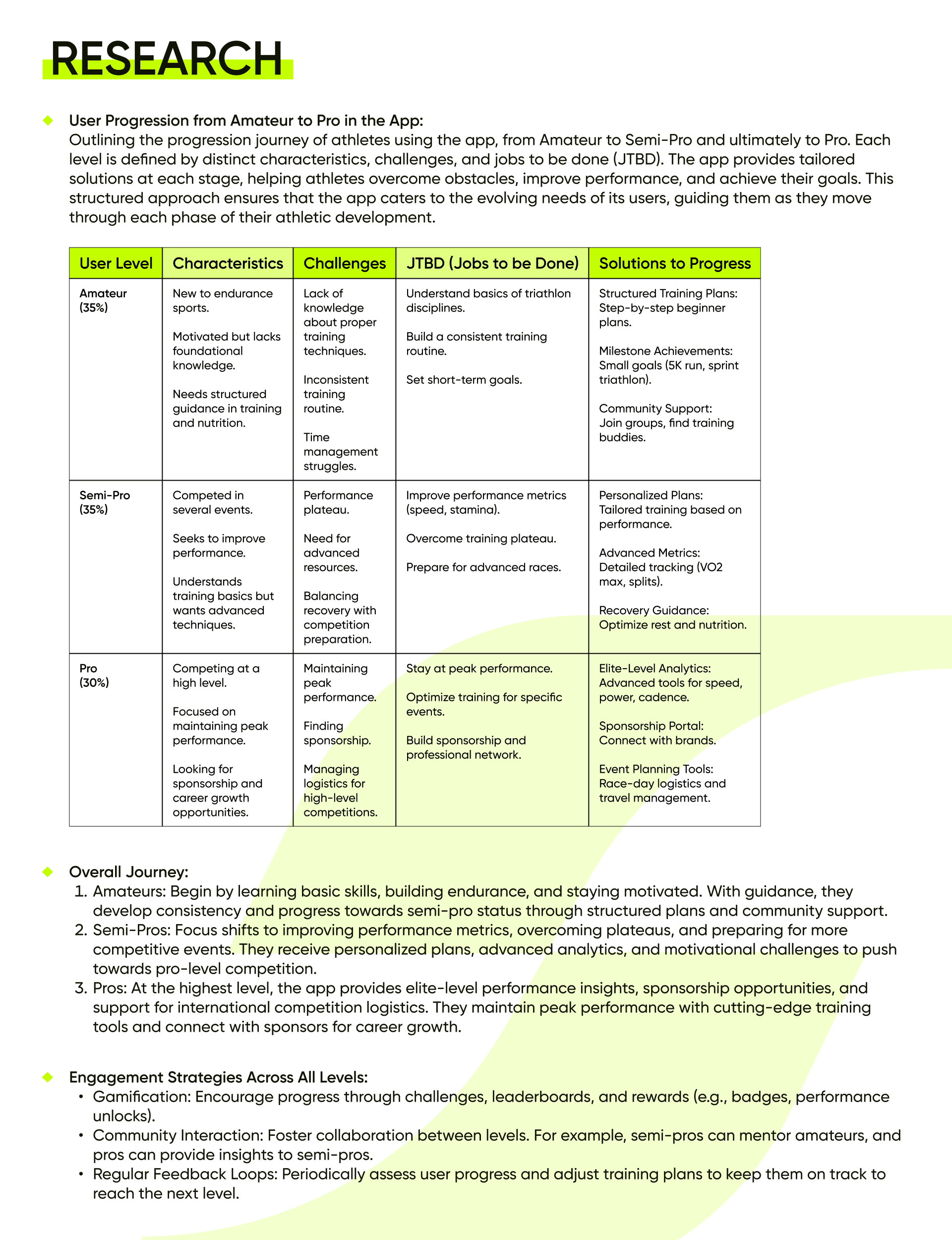
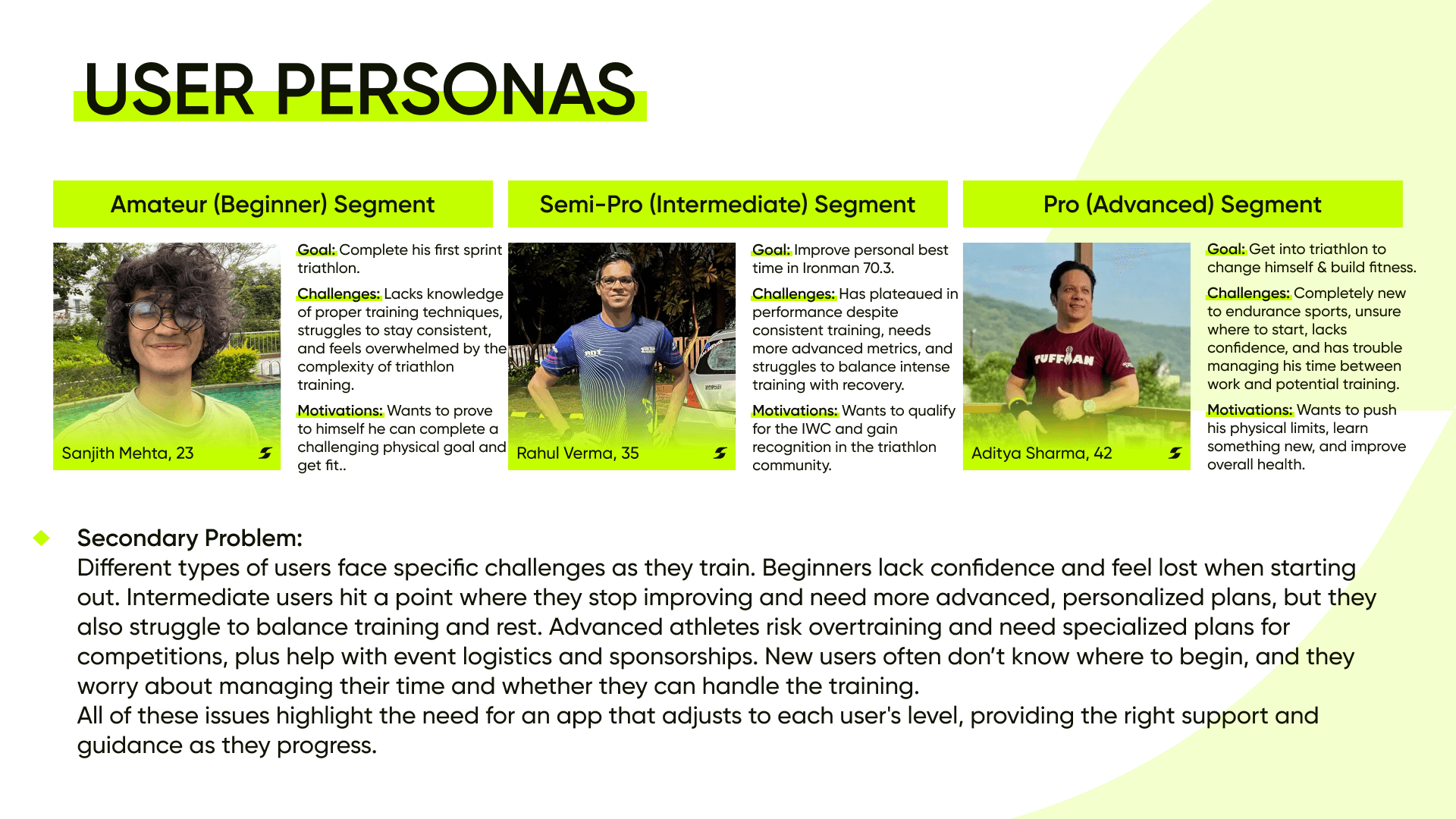
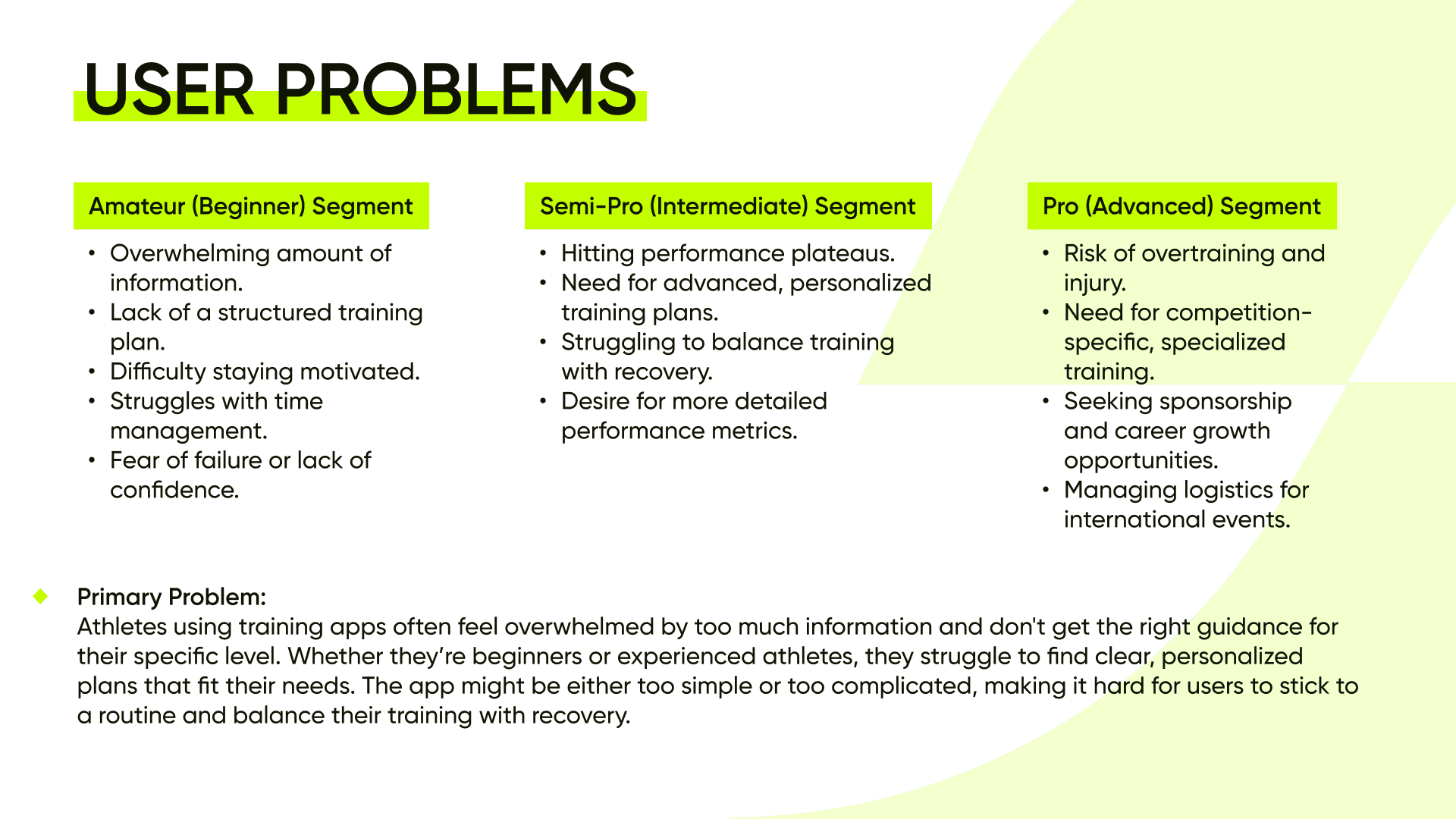
I started with user research. Three athlete interviews across different experience levels, a beginner, an intermediate hitting a plateau, and an advanced athlete managing competition logistics. The same pattern came up across all three: existing apps don't adapt to where you are. A beginner gets overwhelmed. An intermediate gets generic plans. A pro gets nothing that handles the complexity of race prep alongside training.
That shaped a progression model, Amateur, Semi-Pro, Pro, with distinct needs at each level. Everything that came after was designed against it.
THE DECISIONS THAT SHAPED THE PRODUCT
Brand before screens
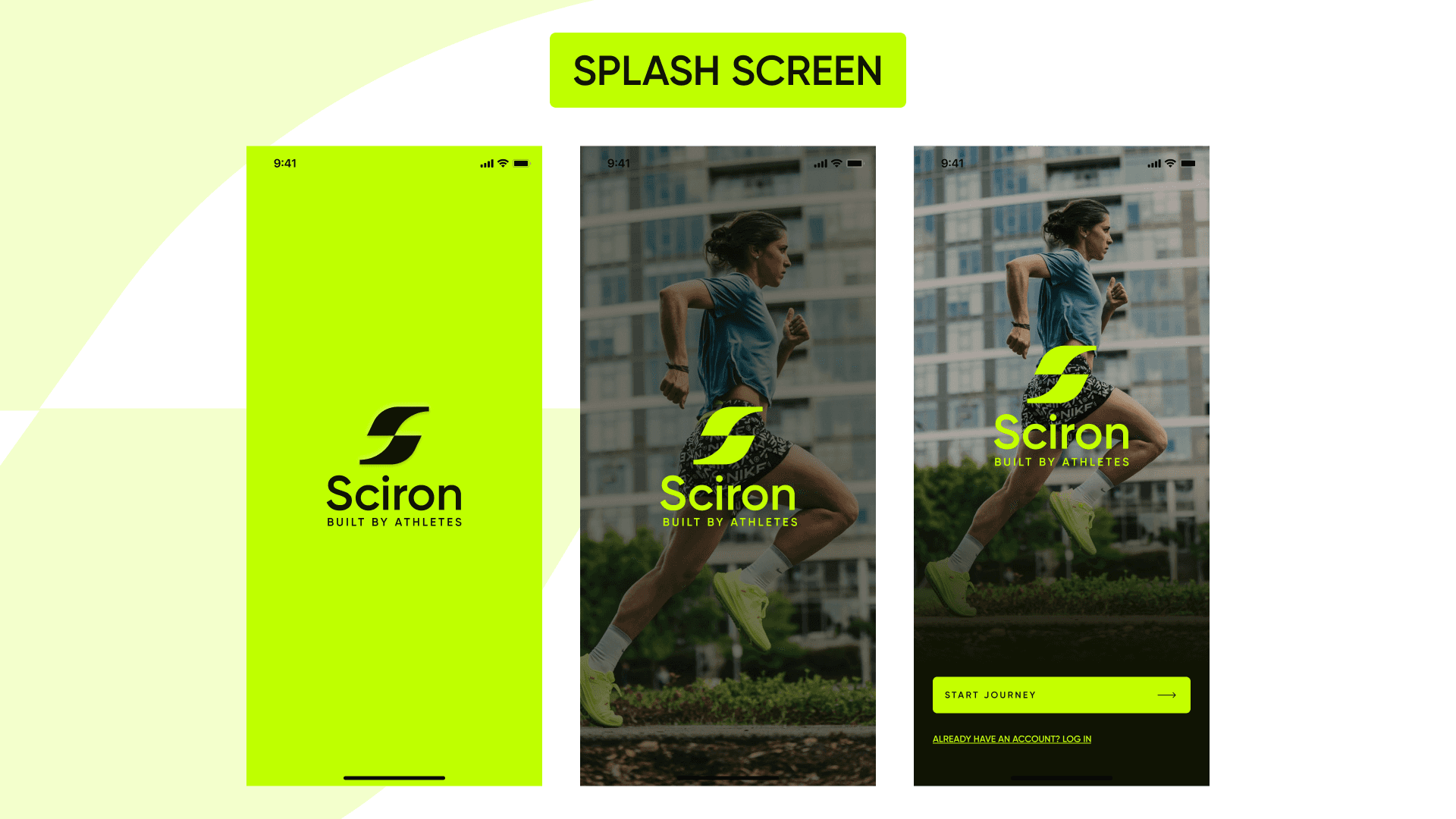
The name Sciron came from two references, Sisyphus, the mythical figure used as a metaphor for marathon perseverance, and a Greek root meaning strength and speed. The name needed to carry both without being heavy-handed.
Lime as the base colour, energetic and focused without the aggression of red. Gilroy for headings, Inter for body text. Precise, premium, readable.
One app, three users
The hardest call was how to handle user progression. A beginner and a pro have almost nothing in common in terms of what they need. Building one experience that treats them the same would've served nobody.
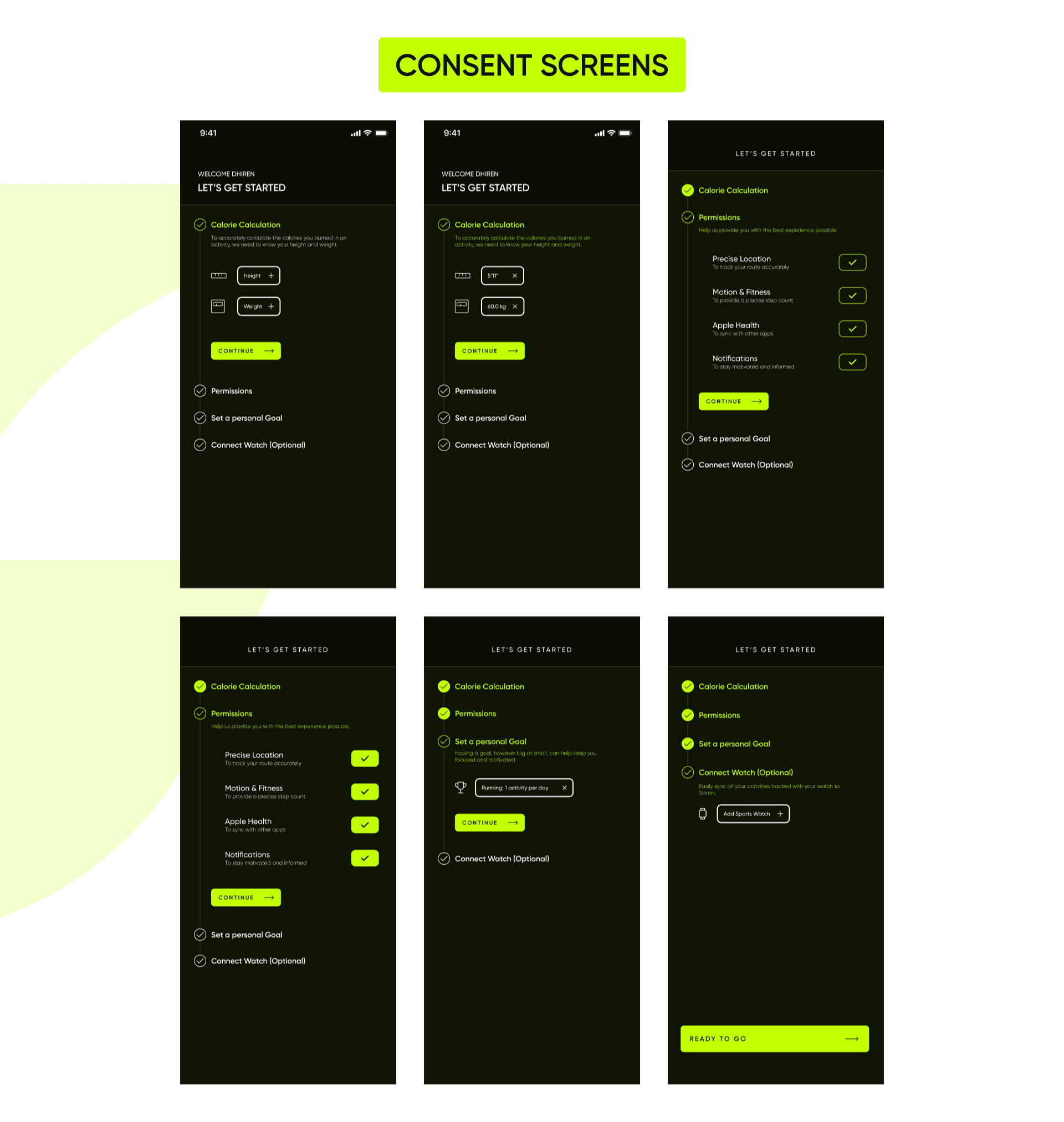
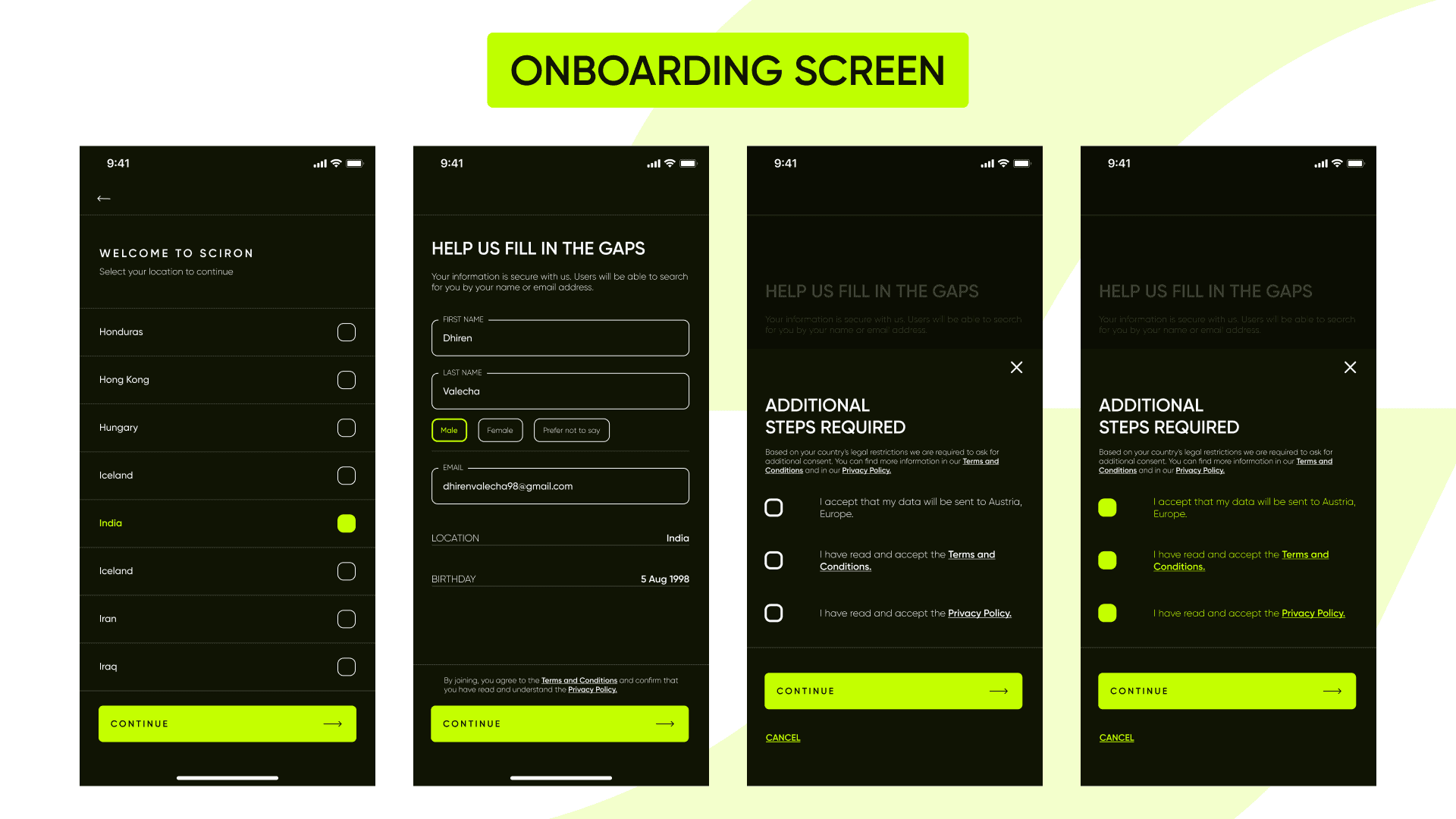
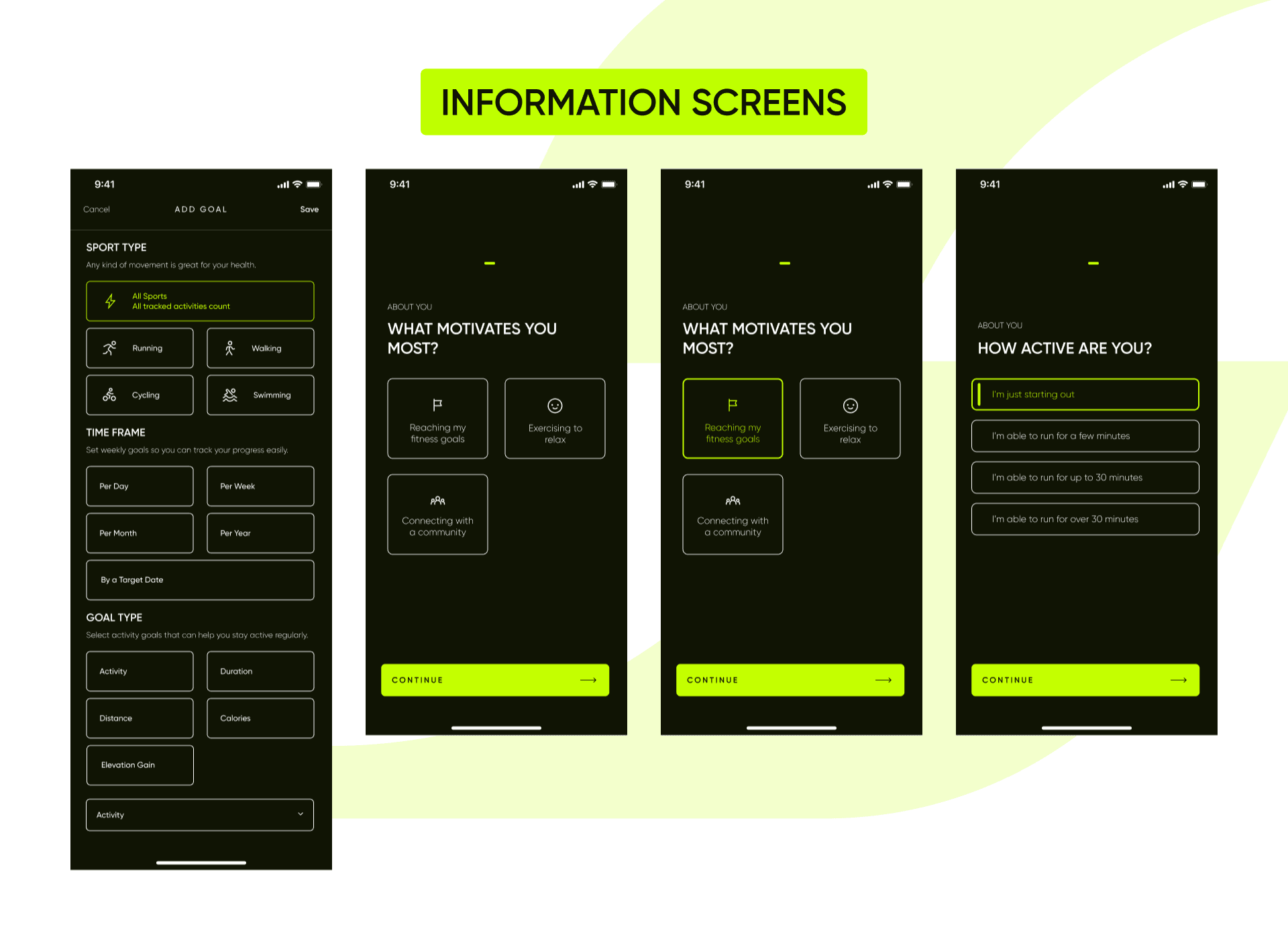
The answer was a personalised onboarding that segments users by level from the first screen and surfaces content accordingly. A beginner sees structured plans and community hooks. A semi-pro gets advanced metrics. A pro gets competition logistics and elite analytics. Same app, adapted experience.
Committing to a direction
Early in the visual exploration I planned multiple colour iterations. After a few screens it was clear the lime was working and further testing was adding noise, not clarity. I stopped and committed.
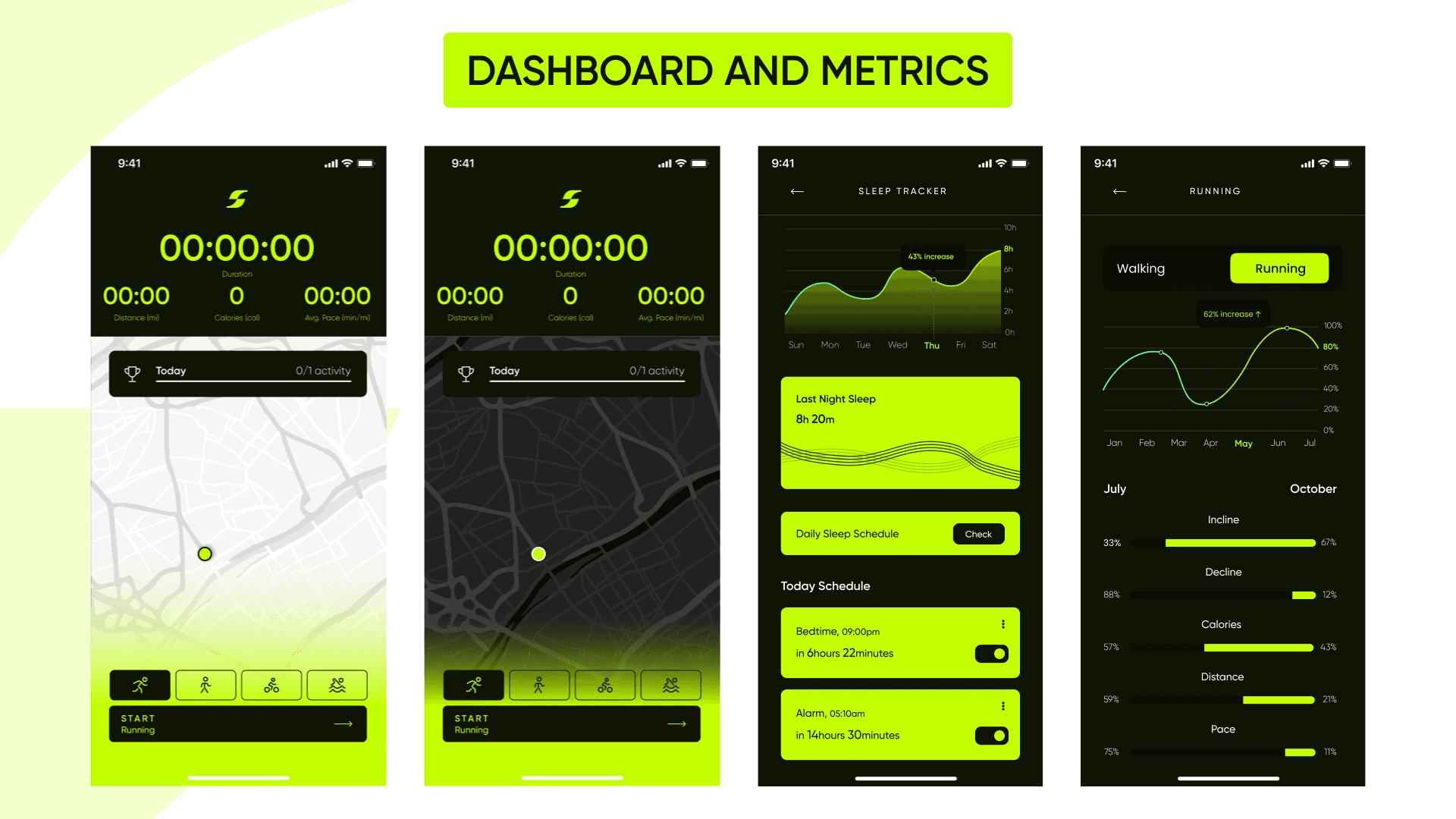
That decision freed up time to go deeper on the screens that mattered, onboarding, dashboard, activity tracking, and performance metrics.
WHAT SHIPPED
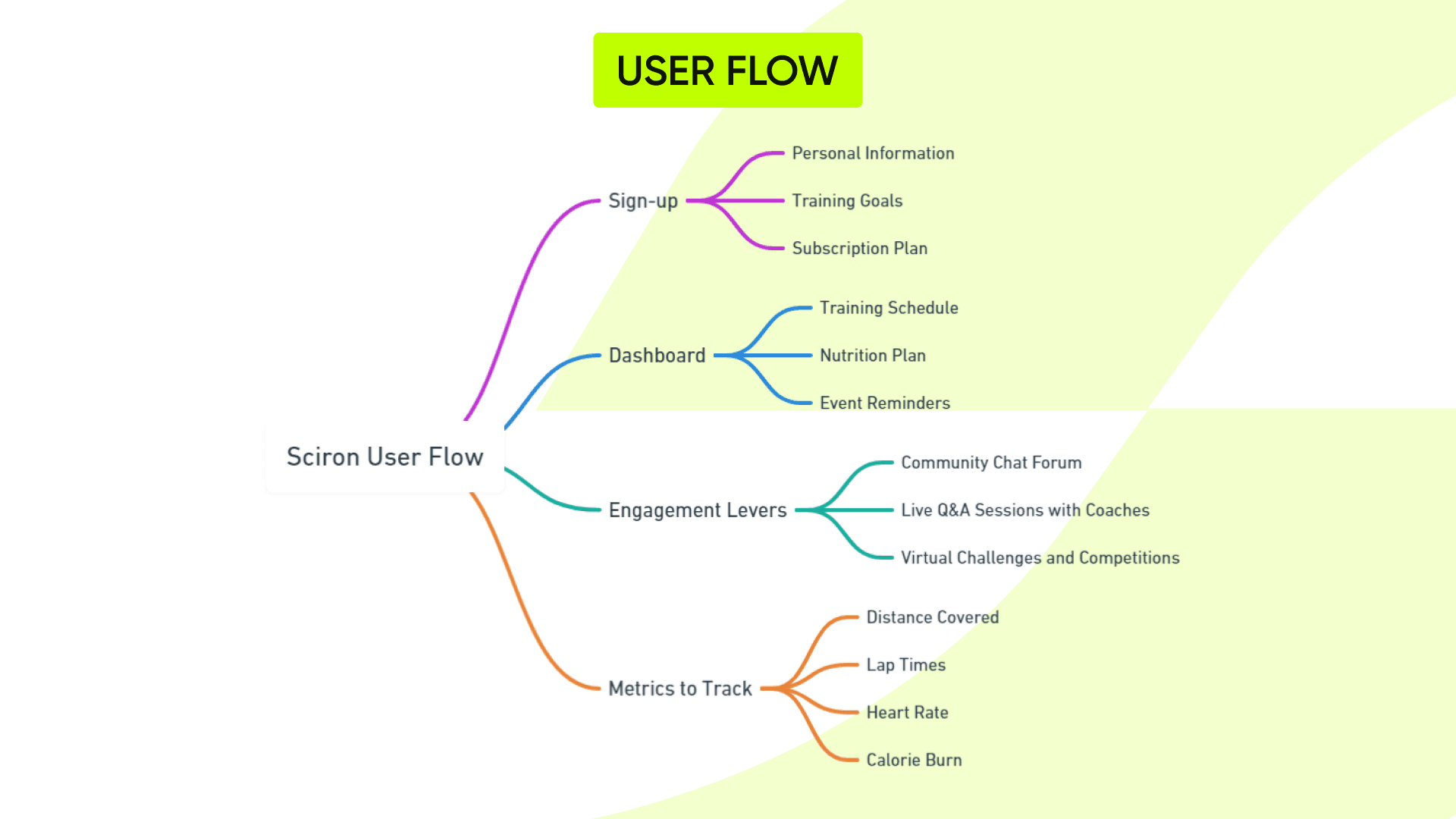
Full product design from brand to final screens, identity system, onboarding, goal-setting, dashboard, sleep tracking, activity metrics, and performance analytics. Visual language consistent throughout, three-tier user model holding across every screen.
What I'd do differently: Athlete interviews should've happened before brand work, not alongside it. A few insights from the pro segment changed how I thought about dashboard hierarchy, finding that later meant rework that earlier sequencing would've avoided.